As a University Student, it’s no secret that financial pressures are at an all time high. From exorbitantly high student accommodation prices, to the constant topping up of our Oyster cards, and the lure of food at every corner, it’s no secret that we, as students, are financially stretched.
But here’s an interesting twist, because we’re living on a tight budget, it’s led to many of us making choices that are surprisingly good for the planet. Could it be that being broke is actually helping tackle clothing waste, one thrifted outfit at a time?
The Reality of Current Student Life
University Students across the nation are feeling the overwhelming financial pressures. According to The Office for National Statistics Student Cost of Living Insights; 66% of applicants are worried about the cost of living at university, and 65% of students are cutting back on food spending or other essentials.
With little disposable income leftover, students can no longer prioritise brand-new clothes, instead choosing to focus on necessities or finding ways to cut costs.
Surprisingly, this financial restraint has revealed an unexpected silver lining: by limiting spending, students are subconsciously making choices that reduce consumption and shrink their environmental footprint.
Second-Hand Fashion on the Rise
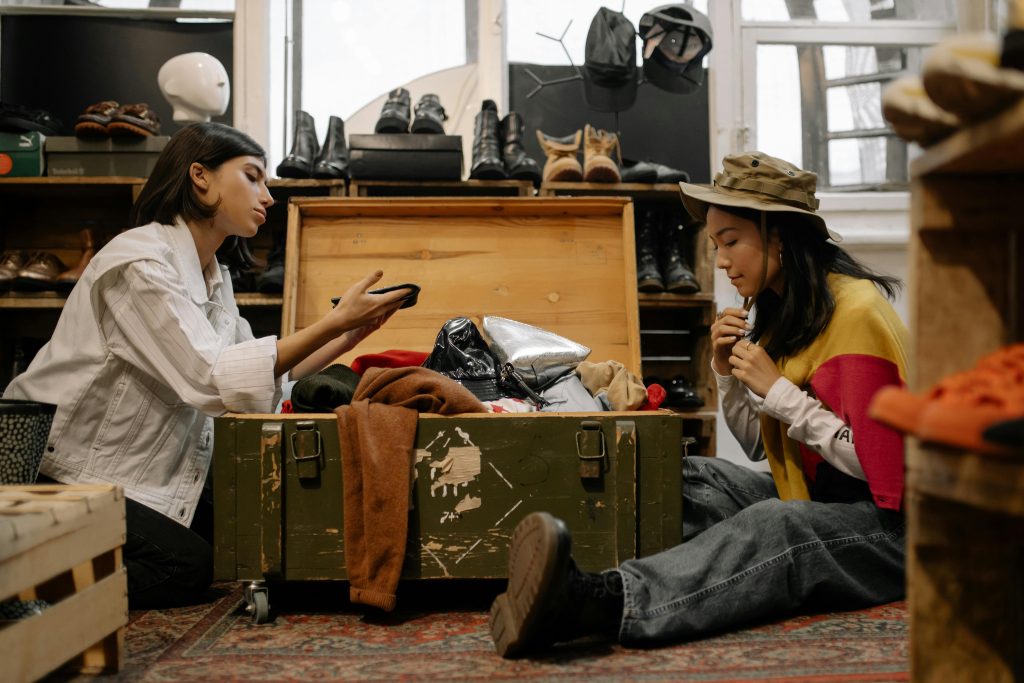
Instead of splurging on fast fashion or high street stores, students are now embracing charity shops and second-hand clothing platforms. A quick stroll through Bricklane or Portobello Road shows a generation swapping shopping sprees for second-hand treasures.
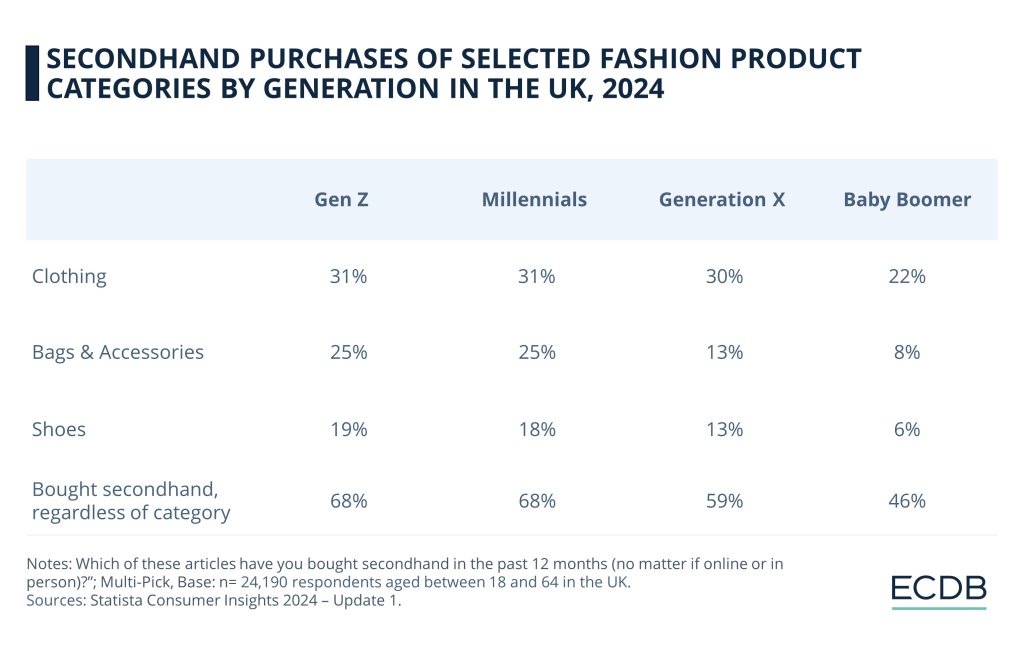
Second-hand and vintage fashion has become a mainstream trend among GenZ, combining affordability with style. 66% of GenZ shoppers prioritise second-hand purchases, and 42% of students are shopping at second-hand stores regularly. Online resale platforms like Depop, Vinted, and Ebay have made it even easier to buy and sell clothing, further accelerating this movement, and GenZ consumers are the main users accelerating the growth of resale platforms .
At Westminster, this trend is clearly visible on campus. Every day, I see students proudly wear thrifted leather jackets and vintage tees. Buying second-hand is no longer just about affordability; it’s about individuality and reducing environmental impact
The Knock on Effect: How Buying Habits Are Changing
What’s interesting is that this motivation behind thrifting is evolving. Students have moved from thinking “I buy this because it’s cheap,” to “I buy this because it’s good”. Whether that means good for the environment, good quality, or because it’s good looking. Thrifting has made students pay more attention to material composition, environmental impact, and style.
Environmental Awareness
Initially, many students choose second-hand because it’s cheap rather than a conscious environmental choice. However, over time, this has shifted, and awareness is now growing.
GenZ have been dubbed the sustainability generation and are now considered to be the most environmentally aware demographic. 77% of GenZ have expressed that they would be more inclined to buy from a brand that made sustainable choices.
It seems like the more students thrift, the more deliberate their decisions become, turning budget-driven shopping into conscious behaviour. Fast fashion contributes massively to clothing waste, with millions of garments ending up in landfills each year. Globally, we produce around 92 million tonnes of textile waste every year. By thrifting, students are helping to slow this cycle, extending the life of clothing and keeping them out of the stream of clothing waste.
Quality
While fast fashion has normalised cheaper synthetic fabrics and poor methods of manufacturing, thrifting has opened the eyes of GenZ to second hand clothing with higher-quality natural materials, such as cotton and wool. Many of us now consider the quality of clothes back then to be better than it is now. As a student myself, I had personally started buying second hand because it was cheap, but now I’m noticing how fabric compositions matter and the benefits of it.
Multiple statistics reflect this shift in perception: 61 percent of GenZ consumers are willing to pay more for natural fibres such as cotton because, when compared to other fibres, they consider it to be:
softer (56 percent)
more comfortable (50 percent)
better quality (50 percent)
more natural (36 percent)
longer lasting (26 percent)
and more environmentally friendly (23 percent)
Thrifting isn’t just about cheap prices, but also about quality.
Expression and Individuality
Buying second-hand has also become a key way for students to express individuality. Unlike high-street and fast fashion retailers that sell the same styles to everyone, vintage stores offer one-of-a-kind pieces, allowing students to create a unique style that reflects their personality. This emphasis on authenticity resonates deeply with GenZ, who tend to value uniqueness and creativity in their fashion choices.
For a generation that values creativity and uniqueness, thrifting allows students to step outside the cycle of micro-trends.Thrifting has also revived 2000s and 90s-inspired styles, giving students distinct pieces that express personality without blending into the crowd.
Looking Forward
Here at The University of Westminster, we’re committed to supporting our student community through sustainable and affordable initiatives. Through our partnership with Hazzar, a second-hand platform exclusively for students and staff, we make it easier to access quality pre-loved clothing. We also host regular on campus pop-ups, so next time you’re around, be sure to check one out!
Remember: your clothing choices aren’t just saving you money; they’re quietly helping to save the planet too.
References:
Bottomly, T. (2024) ‘’Under consumption’ trend grows as Gen Z prioritises second-hand shopping’ The Industry Fashion, 22nd October. Available at: https://www.theindustry.fashion/under-consumption-trend-grows-as-gen-z-prioritises-second-hand-shopping/
Busines Waste (n.d) ‘Fashion Waste Facts and Statistic’ Available at: https://www.businesswaste.co.uk/waste-facts/fashion-waste-facts-and-statistics/
Hess, L. (2021) ‘The 101 Of Y2K 2.0: How Fashion Got The Millennium Bug All Over Again’ Vogue, 17th July. Available at: https://www.vogue.co.uk/fashion/article/noughties-revival-trend
Salfino, C. (2025) ‘This Is The Fiber Gen Z Prioritizes While Embracing Authenticity & Sustainability’ Lifestyle Monitor, 18th April. Available at: https://lifestylemonitor.cottoninc.com/this-is-the-fiber-gen-z-prioritizes-while-embracing-authenticity-sustainability/
The Access Project (2024) ‘Cost of Living Crisis: The impact on education’ 25th April. Available at: https://theaccessproject.org.uk/2024/04/25/cost-of-living-crisis-the-effect-on-education/
Tonti, L. (2023) ‘One size fits nobody’: markers of high-quality clothing are getting harder to find’ The Guardian, 18th September. Available at: https://www.theguardian.com/lifeandstyle/2023/sep/19/garment-quality-not-the-same-why-closet-clinic
University of Westminster (2024) ‘University of Westminster partners with Hazaar to launch circular economy marketplace for Westminster students and colleagues’ 20th September. Available at: https://www.westminster.ac.uk/news/university-of-westminster-partners-with-hazaar-to-launch-circular-economy-marketplace-for-westminster-students-and-colleagues
WGSN (2024) ‘40% of Gen Z turn to resale to find the styles they’re looking for’ 23rd March. Available at: https://www.wgsn.com/en/blogs/40-gen-z-turn-resale-find-styles-theyre-looking