
An average resident of Almaty starts harming themselves from the very first breath they take — all because of the steadily worsening environmental situation within the city limits. Almaty regularly appears at the top of various anti-rankings, and at its peak, it often secures first place among the most polluted cities in the world. The situation has become so critical that a single year of living in the city is now equivalent to smoking 24 packs of cigarettes — around two cigarettes a day.
Experts highlight several reasons that leave Almaty’s residents with virtually no chance to breathe freely.
Cars: The City’s Unseen Smokestacks
Researchers believe that the primary cause of the environmental collapse is motor vehicles, responsible for 60–80% of the city’s pollution. On Almaty’s roads, you’re far more likely to see old foreign cars or remnants of the Soviet auto industry with removed catalytic
Hidden Polluters at Home
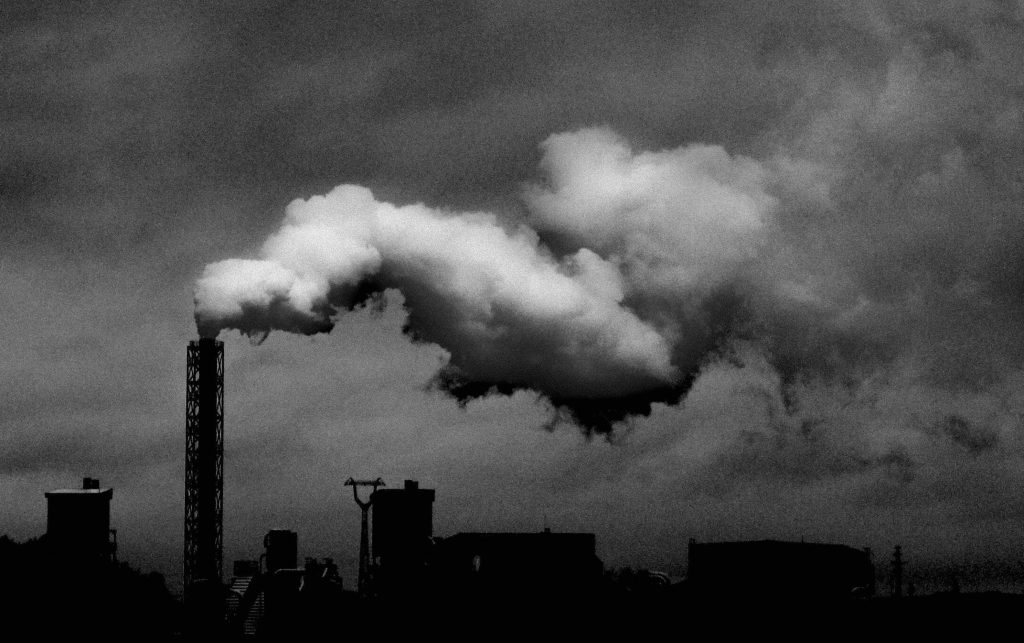
A large portion of its population lives in private housing that is actively heated, using coal and wood. Besides this, several thermal power stations exist within the city, burning coal that puts out huge amounts of fine particulate matter — worsening an already dire situation.
When Mountains Become Walls

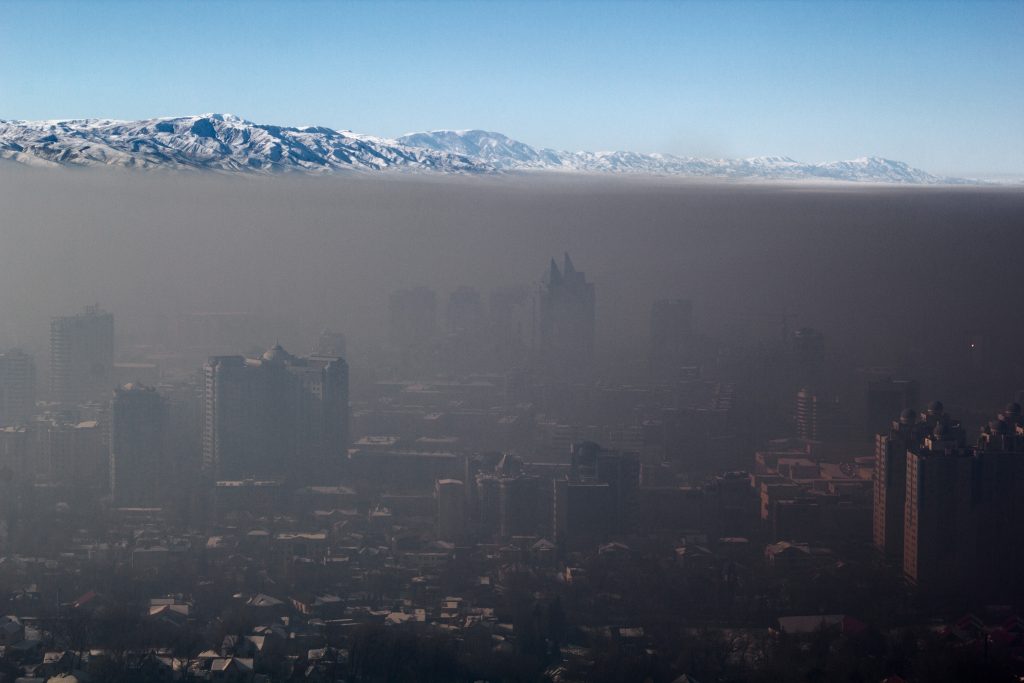
Almaty is surrounded by mountains, which does not allow free air circulation. As a result, all accumulated emissions linger above the city like a dense blanket of smog.
Combined, these factors create a scene that, from a bird’s-eye view or from a mountain peak, resembles not a typical post-Soviet city but a dystopian landscape straight out of Blade Runner — or even something as ominous as Mordor.
Living in a Permanent Haze
Poor air quality is a serious health risk. Pollution is linked to the growth of respiratory diseases, allergies, asthma, cardiovascular diseases, and increased chances of chronic diseases. The majority of Almaty citizens testify to a direct correlation between the state of the air and their health condition: frequent headaches, fatigue, nasal congestion, and similar complaints are mentioned. The most vulnerable among all are the elderly and children. People sensitive to such issues are even advised to wear respiratory masks daily – an unthinkable situation for a modern city.
As many residents say, “It’s like living inside a stove.” And they’re not far off. The smell of ash and burning, fog mixed with dust — all of this has become not an occasional occurrence but an everyday reality. Just as it’s become ordinary to start your morning by checking air-quality apps or, if you’re old-fashioned, just opening a window.
There is no doubt that the problem is sharp and does not go unnoticed by locals. Public frustration and outcry grow as rapidly as rising yeast, and one of the most visible trends is the desire to simply leave. People try to ease their lives in different ways — some stay indoors, some invest in air purifiers — but everyone agrees on one thing: the situation went beyond acceptable long ago. In 2024, the average annual concentration of PM2.5 in Almaty exceeded WHO standards by nearly five times.
Those who express the most concern are often people with above-average incomes, which correlates with higher education levels. Researchers are already calling the situation a “brain drain” since only the more affluent can afford to relocate. Most residents also agree that government initiatives are ineffective, reflecting a general sense of despair.
At the Edge of Hope — and Action
In Almaty, there are indeed several governmental and civic initiatives for the betterment of the situation; still, after years of ignoring this problem, trust has been eroded, leading to huge catastrophic declines in the well-being of the residents.
Reforms underway include increasing the stringency of vehicle inspections so that they reflect real-world emissions rather than pieces of paper, as well as improved air-quality monitoring. Changes to the regulatory framework are introducing mechanisms for more effective emissions control and more accurate tracking of sources of pollution.
Kazakhstan is also actively collaborating with the World Bank in designing and implementing programs that involve the modernisation and/or upgrading of heating systems, such as coal-fired boilers. This effort is meant to encourage residents of the private sector to use centralised or gas-based heating systems.
Naturally, civic initiatives also play a significant role. Their work is mainly oriented at the improvement of air-quality monitoring. Key players include projects like AAI (Almaty Air Initiative) and AUA (Almaty Urban Air).
AAI is currently the most active foundation, committed exclusively to the problem of air pollution in the city. It installs and maintains monitoring sensors, conducts research on public opinion, and organises events that unite volunteers and activists.
Meanwhile, AUA is a civic movement striving to draw the government’s attention to the crisis by demanding improved monitoring and protection of residents’ right to clean air.
It is also worth noting that major domestic companies participate in civic efforts as well — for example, Halyk Bank. In partnership with AAI, they finance home gasification, research, and awareness campaigns.
Conclusion
Today’s Almaty is a city of paradoxes. It is a home for millions who sincerely adore its mountains, its streets, its culture and its rhythm of life. But all of that seems to be hidden under a thick layer of smog – an uninvited companion that now follows each new day. People continue living, working, raising children, making plans — but they do so while every breath reminds them of the price they pay for years of inaction.
One can argue endlessly about who is to blame — cars, power plants, geography, or the lack of systemic solutions. But one thing is clear: the problem is no longer just “background noise.” It has seeped into everything — health, mood, plans for the future, and sometimes even the ability to remain in the city at all. No one dreams of living in an eternal haze of ash and smoke, no one wants to start their morning wondering, “Will I be able to breathe normally today?”
And yet, there is movement. Initiatives, research, sensor installations, gasification campaigns, and inspection reforms — all of this is forming a foundation upon which, perhaps someday, a truly livable Almaty could grow. Yes, trust has been broken. Yes, progress is slow. But what matters is that it has finally begun.