

Many students believe that living sustainably requires too much effort and is too expensive, especially in a city like London. I know – I used to be one of these students myself. However, living sustainably can actually help you save more money. For example, the 2023 WRAP report on food waste revealed that wasting food costs UK citizens approximately £17 billion per year (WRAP, 2023). The truth is that being sustainable can be easy, and even with small everyday changes, you can both save money and contribute to the environment. Here are 10 tips on how you can live sustainably as a Westminster student.
1. Shop Second-Hand

Shopping second-hand is a great way to save up money and reduce the environmental impact of fast fashion. However, some thrift stores can be pretty expensive. But there is no need for you to worry! London is one of the best cities for second-hand fashion. Besides vintage stores, the city is full of charity shops where you can get exciting clothing pieces that will help you express yourself at an affordable price. Moreover, here at Westminster, many campuses organise thrift sales, so don’t forget to check them out!
2. Reduce Your Food Waste
Be honest – we all have that one item in the fridge that has been there for decades and has become a historical artefact at this point. I am guilty of that too. Very often, I tend to buy too many groceries and end up throwing half of them because I don’t have time to cook every day. Next time, before you go to the grocery store, try to plan out your meals for the week ahead. When buying something, think: Am I actually going to use it, and if so, for what? This way, you will avoid wasting your money and food.
3. Try Having a Vegetarian Meal Once in a While

Don’t worry, I am not asking you to completely change your diet. However, having a vegetarian meal occasionally can be beneficial for both you and the environment. According to studies, the entire food production process, from farm to plate, accounts for 26% of all global greenhouse gas emissions (Vegetarian Society, 2025). I know that coming up with new dishes can be a challenge so if you are not sure what to eat, you can always try the delicious vegetarian food options at the university’s cafeteria!
4. Don’t Immediately Throw Out Something if it Breaks – Try to Fix it!
The easiest way to be sustainable is to use the things you already own. When something breaks, don’t immediately go to Amazon; instead, try looking up solutions online if it is possible to fix it. You can also go to a repair store if it turns out to be too challenging.
5. Join Sustainability Initiatives at Westminster
Getting involved makes being sustainable more meaningful and engaging. It can also enhance your university experience. Who knows, maybe you will meet a friend for life during one of our university’s events.
At the University of Westminster, there are plenty of sustainability events, including Sustainability Week and the London Student Sustainability Conference. So come and show your engagement!
6. Use Reusable Water Bottles and Coffee Cups

This is one of the simplest sustainability habits that can make a significant difference, especially for students who purchase drinks on campus daily. According to studies, drinking just three coffees a week in a reusable coffee cup saves 5.5kg of CO2e. It would also save half a kilo of plastic and 150 coffee cups (Thomas, 2024).
Moreover, you can be creative and make a statement with your reusable cup. Pick a design that reflects your style, making it a fashionable everyday-use accessory!
7. Lower Your Energy Use in Student Accommodation

You can make a significant change, even just from your room. Whether you live in halls or a rented flat, these small habits can cut your carbon footprint – and your electric bill:
- Remember to turn off the lights when leaving your room – even if it’s just for a minute,
- Unplug the charges if they are not in use – they still consume power,
- Wash clothes at 30 degrees,
- Avoid leaving radiators on when windows are open or when you are leaving for a longer time,
- Don’t let the water run unnecessarily in the sink when brushing your teeth or washing the dishes.
8. Use Eco-Friendly Study Materials
Small academic habits add up. It’s estimated that universities generate over 250,000 tonnes of waste annually, which has a harmful impact on the environment (Hills Waste Solutions, n. d.). Therefore, if possible, try to choose recycled notebooks or refillable pens to reduce your waste. Using digital notes is also a good solution. Furthermore, try to print on both sides of the paper sheet or switch to digital readers, as it saves a lot of paper throughout the year.
9. Recycle
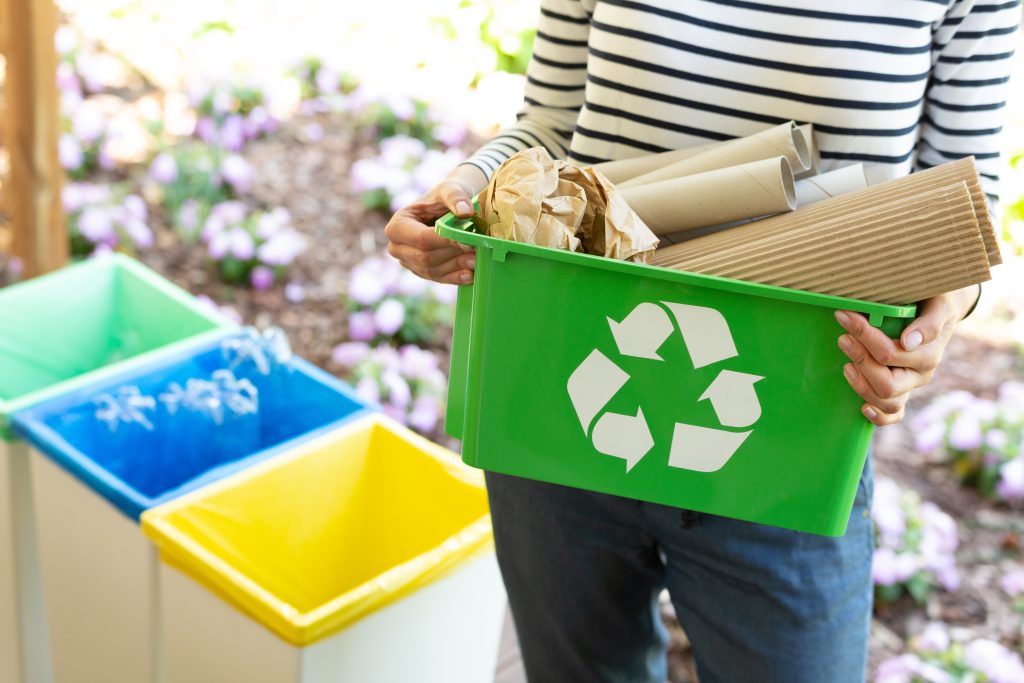
Recycling is one of the easiest and least time-consuming habits that has a positive impact on the environment. Yet we all struggle with it, often unsure which container to put an item in, or simply being too lazy. At Westminster, the colour-coded bins make it simple: paper, plastics, cans and cardboard all have dedicated bins. Remember to always check the label to see if the item you are throwing out is recyclable.
10. Volunteer in one of London’s Community Gardens.

Get involved with London’s community gardens! There are many across the city, such as Marylebone, Regent’s Park or Paddington. These gardens cultivate local herbs, vegetables, and plants that pollinate, thereby supporting the local ecological system and reducing carbon footprint. If you are worried about long-term commitment, there’s no need to – many gardens welcome short-term volunteers.
Summary
London is a city that offers many opportunities for students to live their lives sustainably – whether it’s on the university campus, outside, or even at home. Remember that even a minor change in your habits can have a substantial impact. So take a look at the tips again and choose at least one that you think you can implement in your life.